4 August 2026 · By Ruben Jongkind
México, ¿y ahora?
A ONEFORTHEGAME perspective on what happens after a home World Cup ends early
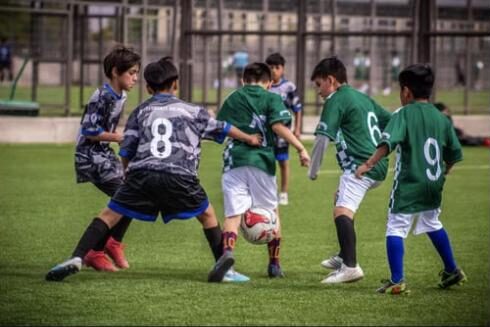
Mexico went out in the round of 16 in its own World Cup. And then did something unusual.
The usual response is to change the coach, as several federations at the same tournament did. Within weeks, the federal government, the Mexican Football Federation and Liga MX clubs stood together and launched a national youth development strategy: a pathway from age five to elite competition, covering school football, federated competition, talent detection, professional academies and the national teams, held together by an FMF Certified Academy system and a National Training System. More than 2,000 academies already carry that certification, serving 168,000 children, with 510 more in process. Scouting will extend into Mexican communities in the United States.
Mexico chose to build. That instinct deserves recognition. The question now is whether the plan contains what long-term success requires, and whether it can be implemented. What we have learned at OneForTheGame about analysing, designing and implementing national football plans can accelerate Mexico's change process.
After more than a decade in Mexican grassroots football, I see several critical success factors. Let's dive into a few of them.
Three organisations, one child
Three organisations shape Mexican football development.
Professional football sits with Liga MX, which separated legally from the federation in April 2026 to run its own governance and business.
Grassroots sits somewhere else entirely: CONADE at national level, State Sports Institutes in all 32 states with their own budgets and their own political cycles, state associations acting as the federation's regional arm, municipal institutes below them again.
School football sits in a third place: under the Ministry of Public Education, which answers to the education agenda.
This structure complicates technical decision-making, because the three bodies want different things. The League needs short-term results; the ministry of education needs long-term child development, participation and integration into the school curriculum; the federation sits in between. Alignment is the key factor for success.
6%
One number inside the federation's own governance matters most. Voting power in the FMF's General Assembly is distributed by tier (FMF Estatuto Social, 2024). Professional and semi-professional divisions carry the overwhelming majority. The amateur sector, where nearly every Mexican child plays, carries a fraction.
| Tier | Share of vote |
|---|---|
| Liga MX | 40% |
| Liga MX Femenil | 18% |
| Liga Premier | 18% |
| Liga TDP | 13% |
| Expansión MX | 5% |
| Amateur sector | 6% |
That matters because of the premise we work from at OFTG: elite success starts with the design of grassroots football, not with the top of the pyramid. Belgium rebuilt its youth game in the early 2000s around small-sided formats, age-appropriate demands and one shared playing idea, and the senior generation arrived a decade later. At its lowest point in 2000, Belgium showed how decisive political structure is when hard technical decisions must be taken. Norway built its children's football around broad participation and late selection, and is now producing elite players at a rate its population does not explain. Both reforms took years and hit serious setbacks. Mexico can avoid them by accepting one fact: the layer holding 6% of the vote decides what Mexico achieves in the coming decades.
The prepared environment
One factor recurs behind long-term success, and it is not the number of academies.
It is the prepared environment: the spaces children play in, the rules they play by, the numbers they play with, and whether the demands placed on them are appropriate for their age. That environment has to be actively challenged as a child develops. Space and rules that force the problems you want them to learn to solve. Formats that change as the player changes. It is set on a school yard, a neighbourhood pitch and a Saturday morning match, and that is where it is won or lost.
In most states the school game runs on unusual field sizes and rules, questionable for a child's physical and psychological development, and on constant one-against-one: attack the player in front of you, defend the player in front of you, go for goal. Duels are contested, and expected to be. It is played with intensity and with something at stake. Mexico loves the game: children wear football shirts on every street, in every town.
That combination of repeated 1v1s in both directions, goal orientedness, toughness in the duel and a culture that treats football as daily life is where the technical comfort, duel power and will to score comes from. The reform must not lose it.
So the current environments must be challenged: spaces, rules, numbers, age-appropriate demands, coach and parent education, while protecting the strength they have already produced.
Copying the policies of successful countries will not work. Building the Greek national football plan with the leadership of the Greek Football Federation made one thing clear: a nation's context and culture are essential to its football vision. A national plan must therefore be designed and executed participatively, so every stakeholder owns the change.
Coaching and parent education
Alongside the environment sits the half most national plans underfund: the education of coaches and parents. A parent shapes a child's daily football culture at least as much as a coach does: what gets praised, what gets punished, whether a mistake is a disaster or the point of the exercise. Investment in academies and certification works only when matched by investment in the adults around the child. Otherwise only half the mechanism is funded.
This is the biggest challenge: equipping Mexican coaches and parents to guide children and build safe learning environments. At the Saturday school tournaments in Chihuahua the passion of coaches and parents on the sideline struck me. So did how quickly it turns hostile: fathers pressuring their sons and daughters, coaches interested only in winning at the expense of the children, and children whose behaviour follows.
What is good for the children is good for football
Our position has not changed in twenty years: what is good for the children is good for the football community. A pathway is only as good as the environment feeding it. If certification is funded and the environment is not, the pathway will find fewer of the players it was built to find. Protecting and improving the everyday environment is not the soft, secondary half of a national strategy. It is the part everything else depends on.
Mexico did the hard thing first. It chose to build rather than blame, in the week when the pressure to do the opposite was at its highest. The question is what happens next. The players who enter this system at five or six will not reach a senior national team until the late 2030s. Can Mexico align three systems while protecting what it already has? Writing a national plan is one thing; getting the analysis and the design choices right is another, and executing them is harder still. Will Mexico avoid the mistakes made in Belgium, the Netherlands, Norway and Greece?
For the sake of football let's hope so and see Mexico where it belongs: among the structural top 10 football countries in the world.
If you carry responsibility for a federation or club asking these same questions — about pathways, playing time and the patience a rebuild demands — this is the work we do every day with federations and clubs. A confidential conversation starts through our contact page.
ONEFORTHEGAME
← Back to Blogs