Back to all insights · Explore our work with clubs
15 September 2026 · By Ruben Jongkind
Genk a goalplayer’s goldmine?

For a long time we at ONEFORTHEGAME have been intrigued and puzzled by the amount of absolute elite goalplayer talent coming out of one particular place in Belgium, just over the border with Holland: Genk. So when we brainstormed with The Athletic about a series on football architects, the people behind remarkable football stories of countries and clubs, we proposed that goalkeeper coach Guy Martens had earned a place in it, and we connected him to The Athletic. A great story was the result.
On the last day of the summer window Liverpool paid KRC Genk €33m for Lucca Brughmans, eighteen, the highest fee ever paid for a teenage goalkeeper and the biggest sale in Genk’s history. He is the fourth goalkeeper Guy Martens has guided to the top of the game in fifteen years.
| Player | Buyer | Year | Age at sale | Fee |
|---|---|---|---|---|
| Thibaut Courtois | Chelsea | 2011 | 19 | €9m |
| Koen Casteels | Hoffenheim | 2011 | 19 | Undisclosed |
| Maarten Vandevoordt | RB Leipzig | 2024 (agreed 2022) | 22 | €10m (reported) |
| Mike Penders | Chelsea | 2025 (agreed 2024) | 19 | €20m |
| Lucca Brughmans | Liverpool | 2026 | 18 | €33m |
Seventy-two million euros for four goalkeepers, three of them sold before they were twenty, from a coal town of 67,000 whose club turned over €102.9m last season. Seven of the goalkeepers in last season’s Belgian Pro League came through Martens’s hands. He told The Athletic he has “never had a green apple become a red apple”: they ripen elsewhere, before twenty-one. However, nobody at Genk set out to sell goalkeepers. Nobody at Genk even picks one before a boy turns twelve.
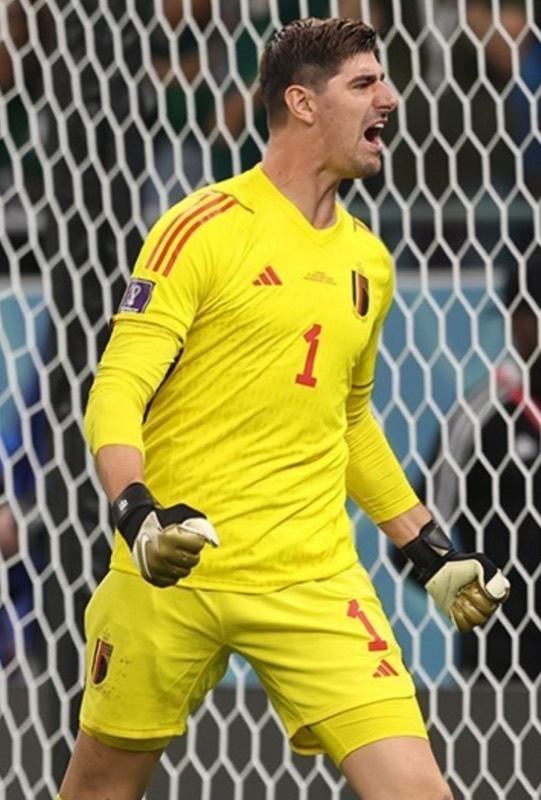
The prepared environment
Below twelve, Genk does not recruit goalkeepers. Every child takes his turn in goal and plays outfield the rest of the time, and the specialists are chosen in the teenage years from the boys already there. Martens has never had a good goalkeeper who was in goal from six. Courtois played outfield until twelve, and at thirteen some at the club wanted to release him because he was not growing.
As a club, why deny yourself a goalkeeper for six years? For the answer we have to go to the maestro, Johan Cruyff. Cruyff was always exacting about the quality of his goalkeeper, because for him the goalkeeper was the first attacker in the build-up and the last defender, and when he took charge of Ajax in the 1980s he brought in Frans Hoek as goalkeeper coach to work those ideas out on the training pitch. Hoek put goalkeeper training inside team training and eventually stopped calling the position goalkeeper at all: it became the goalplayer. We still prefer that word, because in essence the player in the goal is not only a keeper but even more a footballer. Martens took his method from Hoek and uses Cruyff’s phrase to this day. When I ran the Ajax academy with Wim Jonk we inherited all of it, and I would like to say we always honoured it.
In the terms of the great educational philosopher Maria Montessori, Genk has built a prepared environment: the adult does not instruct the child, he arranges the surroundings so that the child meets the whole game, in every role, at the age when he absorbs it. The rotation is the environment.
Volendam
I have also seen the method work somewhere with no coal and no Champions League. In 2019 FC Volendam had finished sixteenth of nineteen in the Dutch second division, in a stadium that was mostly empty. We took over the football side with the same principles: scout goalkeepers for how they play football, put them in early, keep them in after mistakes and guide them in their process of development. In other words: prepare their environment. Within four years all of them had made huge steps.
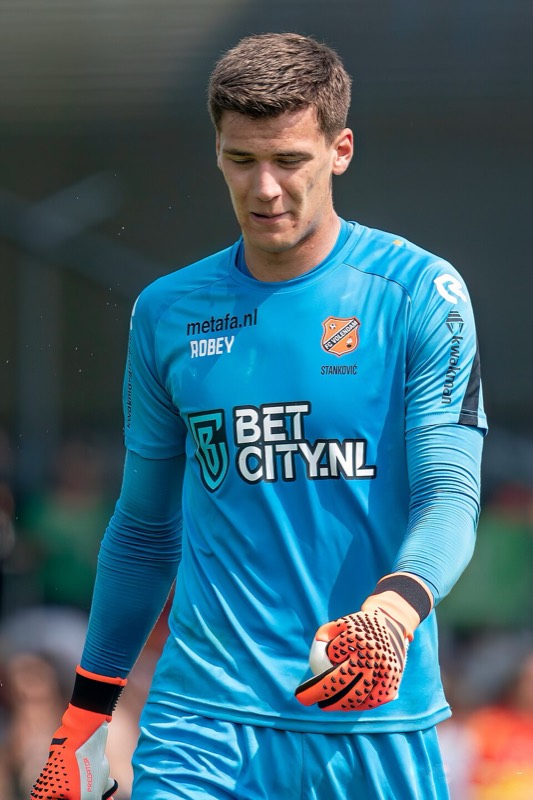
Filip Stankovic arrived from Inter in 2021, aged nineteen. In his first match for Volendam he made a mistake, was sent off, and we lost, and on top of that he was carrying an injury that had troubled him for years. We kept picking him and worked on the injury until it was gone. He is now the goalkeeper at Venezia, back in Serie A this season at twenty-four.
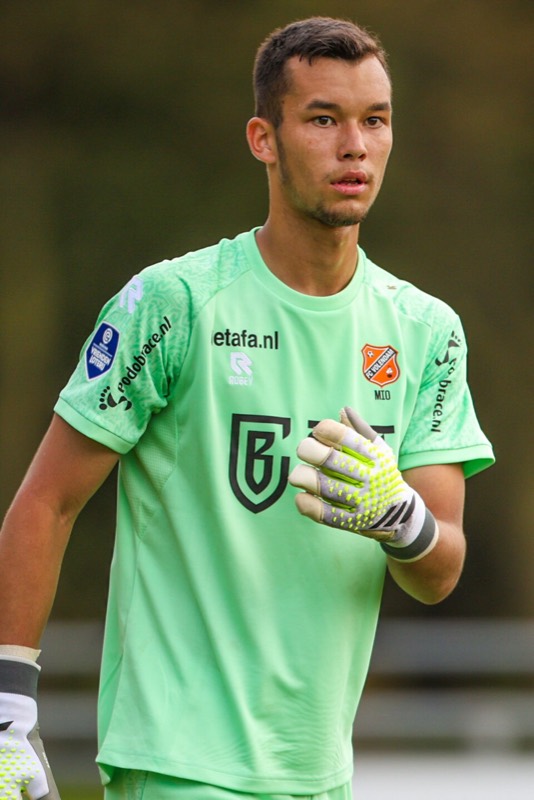
Mio Backhaus came on loan from Werder Bremen in 2023, also nineteen, and made errors that cost us points in the Eredivisie. We kept playing him. He made 176 saves that year, more than any goalkeeper in the division, made his Bundesliga debut two years later and this summer signed for SC Freiburg as their first choice, at twenty-two. The third we discovered at an amateur club in Amsterdam. Kayne van Oevelen had started in goal late, in his teens, and had a great deal still to learn when we gave him a contract and then extended it. He played 64 matches for FC Volendam, helped win promotion in 2025, and this summer Ipswich Town paid £3.4m for him and gave him a five-year contract; he is spending this season on loan at Valencia.
Three goalkeepers from a village club in just four years, with a total estimated market value of around £25m. None of them was ready when we first played him, and each cost a result before paying it back. What we gave them was not talent, they had that, but a place that was safe and orderly: a boy who has been sent off in his first match knows on Monday that he plays on Saturday, that the error is being worked on and not held against him, and that the people around him are not looking past him for the next one.
Undervalued
My own view goes further than the fees. In The Numbers Game, from 2013, Chris Anderson and David Sally showed that goalplayers are underrated because the transfer market and the media reward goalscorers and commercial fame far more than the prevention of goals. One error is one goal, and no other position carries that pressure. Yet the record fee for a goalkeeper, the £71m Chelsea paid for Kepa Arrizabalaga in 2018, is a third of what Paris Saint-Germain paid for Neymar the year before. Goalkeeper fees have always lagged, and €33m for a boy who has not started in the top flight suggests the market has begun to notice.
Skills wise, he also has to do more than a field player. Next to what the field player needs, receiving under pressure with both feet, passing short and long, reading the game, deciding in a fraction of a second, the goalplayer has to catch, dive, dominate the air, dominate the one-against-one, throw, and organise the defence. In other words the goalkeeper’s skill set is a superset of the outfield player’s, and for a century the game has trained him as if it were the reverse, on a side pitch with a bag of balls. Martens says the same from the coach’s side: the best players are also the best goalkeepers.
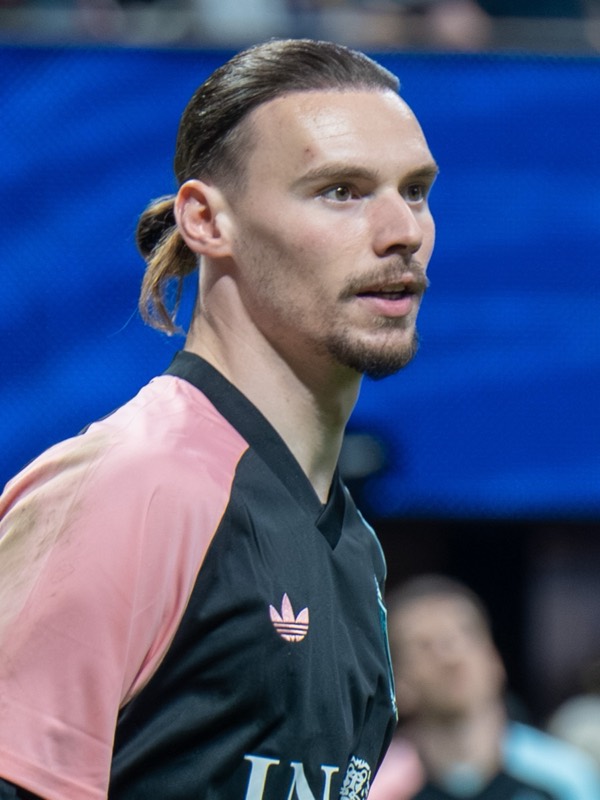
Easier said than done
There are three layers, and they are not equally hard to copy.
The easiest is the age rule: no goalkeeper before twelve, everyone rotates. It is freedom within limits, the child chooses how he plays but not whether he takes his turn. What does it cost? Maybe a few lost Under-10 matches against a club with an eight-year-old specialist.
The middle layer is training and measurement. Goalkeeper training at Genk happens with the outfield players, so the decisions a keeper makes in a match, whether to come, whether to punch, whether the near post is covered, are the decisions he trains. Growth testing is delayed, so nobody at fourteen is written off because a chart says he will stop at 184cm; Martens observes the boy for years rather than measuring him once. Observation, according to Montessori, is the teacher’s first tool, and the one most academies do not spend enough energy on.
The hardest layer is the culture. In December 2019 Vandevoordt became the youngest goalkeeper ever to play in the Champions League, at seventeen years and 287 days, tried a Cruyff turn in his own box at Napoli, lost the ball, and Genk lost 4-0. Martens’s position was that a proactive mistake belongs to the coach who asked for proactivity. Vandevoordt is now first choice at RB Leipzig.
The other half of the culture is the squad rule: four goalkeepers in the first-team squad every season, at least two of them seventeen or younger. Montessori built her classrooms on mixed ages for exactly this reason, and Genk’s goalplaying group is one: a boy of seventeen trains every day beside men of twenty-five and thirty-two, watches how they prepare, how they read a cross, how they behave after conceding, and absorbs it without a single instruction, while the senior keeper who has to explain himself to a boy understands his own role better for doing so. The adolescent learns from the peer just above him, the elder learns by teaching, and the coach becomes what Montessori asked the adult to be, a guide who arranges the group and then steps back. Brughmans, whom Martens rates the most explosive keeper he has worked with, made his professional debut before his eighteenth birthday, an age at which most clubs still keep a boy among boys.
This asks the head coach, the technical director and the board to defend the goalplayer even after a 4-0 loss, or after a red card in a first match at Volendam.
What can we learn?
For twenty years we have said that what is good for the children is, in the end, good for the football community, and Genk shows the order plainly. First the children: every one of them gets the whole game until twelve, nobody is measured before he has finished growing, a seventeen-year-old learns beside men in the senior squad, and when he makes a brave mistake the club takes responsibility. Then the community: the supporters get seven goalkeepers in their league and a club turning over €100m, the board gets a record sale and a profit, Chelsea and Liverpool get goalkeepers they could not grow, and a former coal town gets €33m. The money is the evidence, but it is not the first objective; it comes from the good work of years.
A regulation can be changed: no child may be registered as a goalie before Under-13, for example. Below that age they rotate: in each match a different child starts in goal and swaps with a team-mate at half-time. With a squad of ten playing 3v3, 5v5 or 8v8 over twenty matches, each child spends a part of the season in goal and the rest in the field. That is how they find out whether they like it and are good at it, and it helps all children to appreciate and understand the role of the goalie. Would clubs resist? Some would, for a season.
So look again at a small-sided pitch on a Saturday morning in Limburg, with an eight-year-old in an outfield shirt taking his turn in goal, and ask why a town that would not fill Wembley keeps producing the most expensive young goalkeepers in Europe.
ONEFORTHEGAME
Photos: Michiel Hendryckx (CC BY-SA 4.0), Hossein Zohrevand (CC BY 4.0), Carlo Bruil Fotografie (CC BY 2.0), Stefan van Nierop (CC BY-SA 4.0), Bryan Berlin (CC BY-SA 4.0), via Wikimedia Commons.
← Back to Blogs